
Travel Guide
Sapa Bus Station- Latest Updates On Timetables & Tickets

Aug
Introduction
Bus is one of the most important means of transportation for visitors to Sapa. Thus, the Sapa Bus Station plays a significant role as a main arrival/departure hub for vacationers and locals in this city. Indeed, Bus Station Sapa has been facilitating tourism activities and local transportation for a long time.
As you may know, Sapa is a popular tourist destination in Vietnam. Its charming landscapes, such as Fansipan Peak or Muong Hoa Valley, urge travelers to discover and conquer. Furthermore, Sapa treats visitors to an original culture, shown vividly via pastoral villages and a diverse native community.
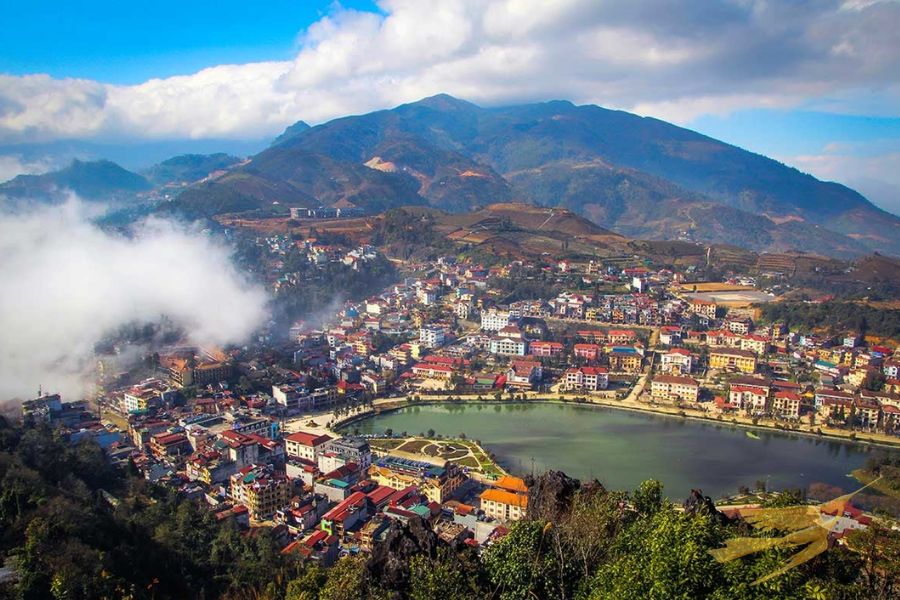
Possessing such great delights to offer, Sapa has welcomed numerous visitors each year. Most of them choose buses as the chief means of transport. Low costs and high availability make buses so easily accessible for tourists.
Want to know more about Sapa bus station schedules, tickets, and other useful information? Sapa Private Car will provide a complete travel guide of the Sapa Bus Station in this blog. This guidebook is for backpackers, domestic tourists, international visitors, and anyone about to take a trip by bus in Sapa.
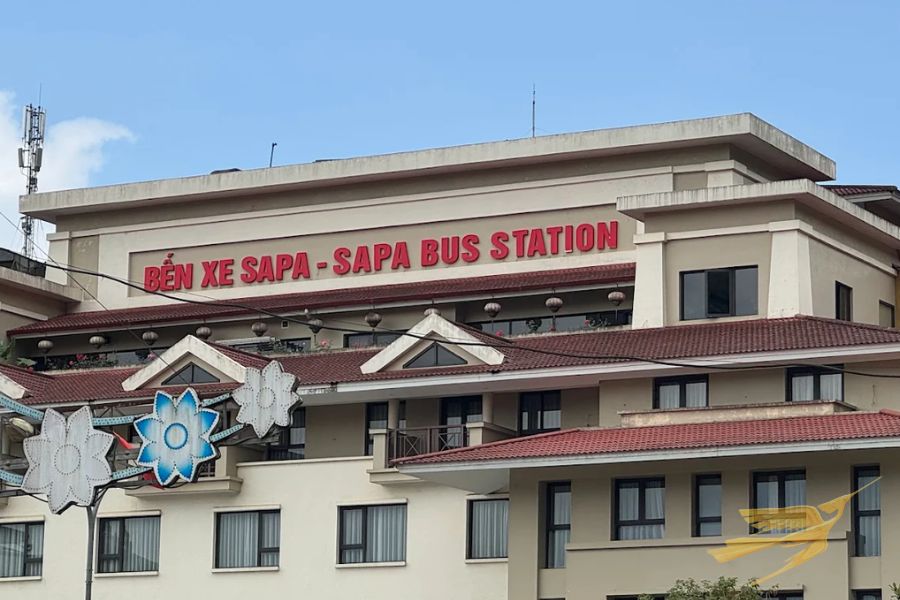
Sapa Bus Station Address & How To Get There
Sapa Bus Station location: 302 Dien Bien Phu Street, Sapa, Lao Cai
Sapa bus station map preview:
The bus station in Sapa is situated right in the heart of the city. So, it’s really easy to find via Google Maps.
Thanks to its favorable location, many bus brands choose Sapa bus station as the primary pickup and drop-off center. Instruction signboards are also placed in the station for customers to spot their buses better.
Moreover, this station is in close proximity to Sapa town center, major hotels, and tourist spots, very convenient for visitors.
Besides, downtown transportation options from/to the Sapa bus station are always available to use. You can catch a traditional taxi, use ride-hailing app services (e.g., Grab and Xanh SM), or hire a motorcycle.
Types Of Buses Available
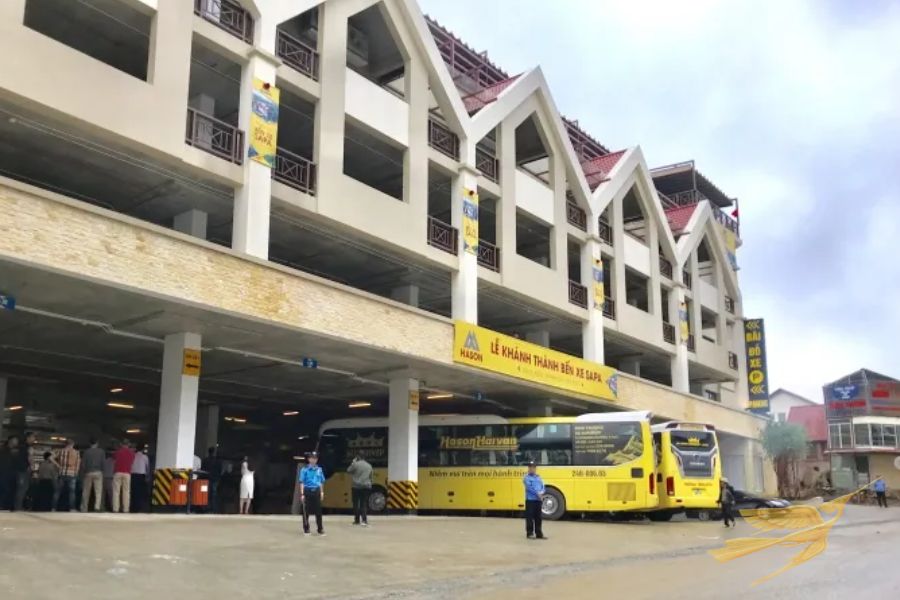
At the Sapa Bus Station, there are various types of buses active at the same time, including public buses, sleeper buses (minivans), and limousine buses. Tourists should know how to differentiate these kinds to choose the best options for their travel.
Depending on your preferred service quality and routes (e.g., Sapa to Hanoi, Sapa to Lao Cai, etc.), you can decide which type of bus to go for. Here is the detailed information for reference.
Public Bus
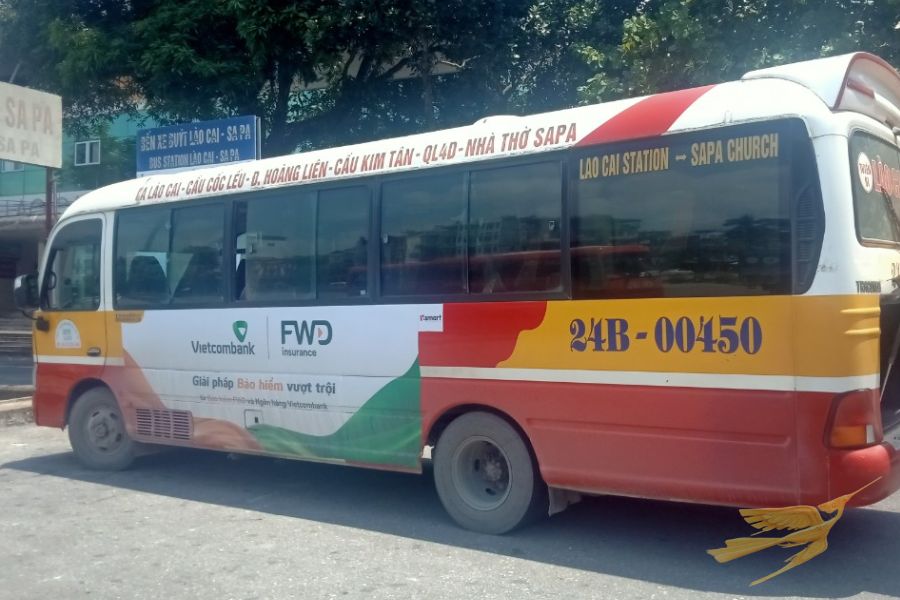
The public bus 01/ LC1 mainly serves the Lao Cai – Sapa route. It’s developed by the state-owned Joint Stock Transport Company of Lao Cai. So, the price is cheaper than other bus types.
Public buses are usually the standard 29-45 seater models of Samco or Thaco, without deluxe amenities. They may get really crowded during peak hours or peak tourism seasons.
Sapa public buses are suitable for local commuters, budget-minded tourists, or those who want to experience public transportation in Sapa.
So, what are the pros and cons of the Sapa public bus?
In terms of benefits, it’s cheap and economical for those who have a limited budget (around $1/person/way). Also, it’s highly available, running continuously throughout the day. Finally, tourists can get to know the locals’ daily transport practices by trying a public bus ride.
On the contrary, travelers may have to deal with several inconveniences when riding a public bus. First, the bus driver will make the usual stops along the way to pick up more passengers, thereby lengthening the travel time.
Besides, there will be no Wi-Fi, complimentary water, comfortable seats, or door-to-door pickups (You must go to the Sapa bus station or wait on the road).
Another disadvantage is that you will confront overcrowded spaces during peak hours, weekends, and holidays. Its limited spaces are also not suitable for those with bulky luggage.
Shuttle Bus/Sleeper Bus
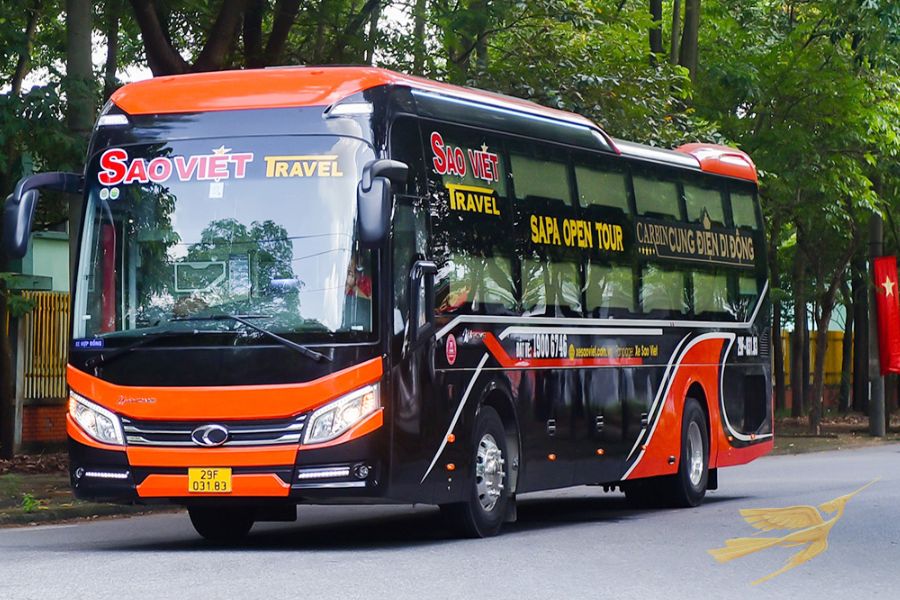
Tourists can also use sleeper buses at the Sapa bus station. It serves the longer routes, such as Sapa-Hanoi. Almost all sleeper buses are run by private companies. They usually provide 16-seaters (Ford Transit or Mercedes Sprinter), 29-seaters, and 45-seaters of the newer models than public buses.
Sleeper buses are more popular among tourists. This option is ideal for families and small travel groups seeking a balance between budget and service quality.
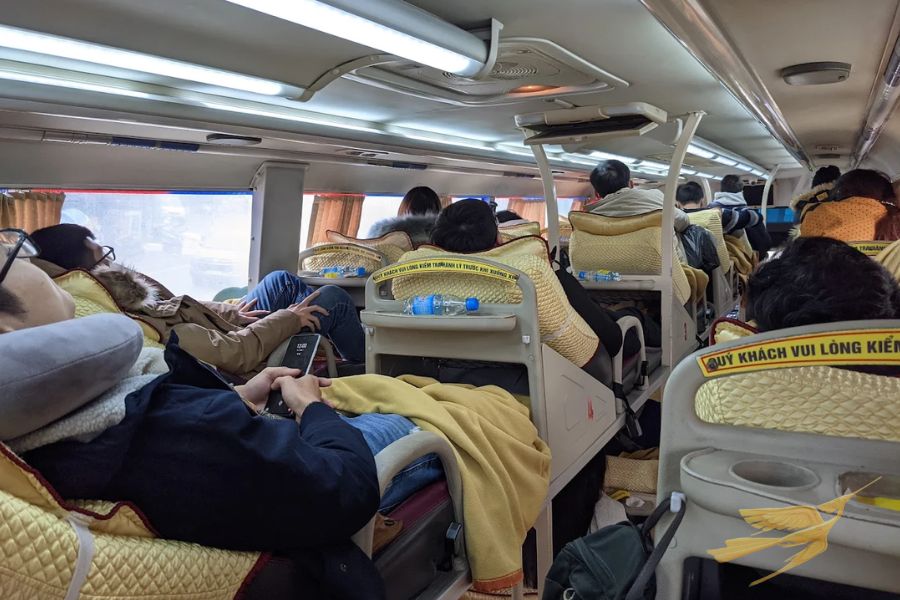
Sleeper bus advantages include better comfort (offering soft seats and clean spaces), shorter travel durations thanks to fewer stops en route, flexible pickups and drop-offs, and easy bookings via hotlines or travel agents.
However, better quality comes with higher prices than public buses. Also, service quality is not guaranteed, but it may be good or get worse depending on different suppliers.
Recommended shuttle bus suppliers: Ha Son Hai Van, Sao Viet, Phuc An, Kad Bus, and Ket Doan.
Limousine Bus
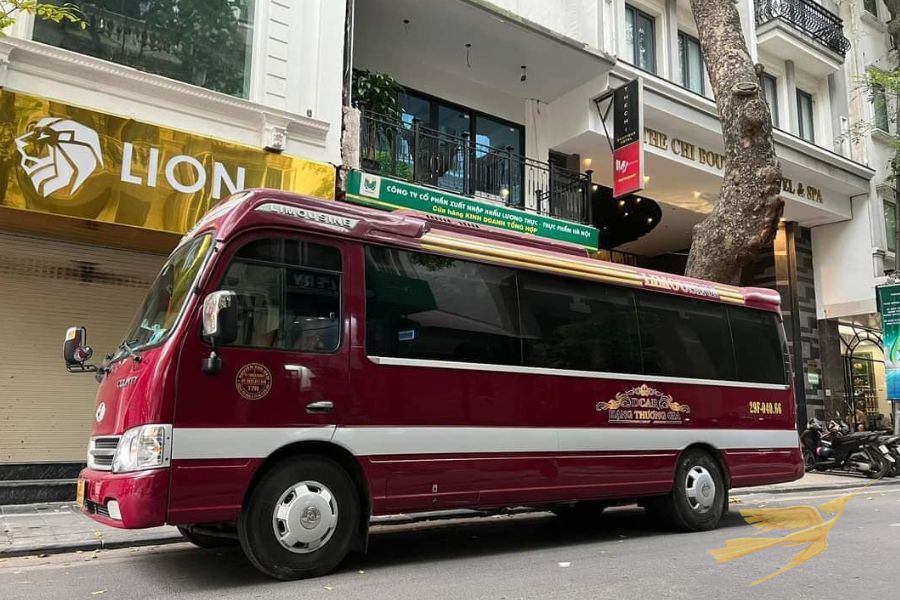
Limousine bus is a more advanced option compared to other bus types. It provides better seats in a newer and cleaner car. Spacious as a 16-seater, limousines only accommodate 9–11 passengers, thus, very roomy. Its seats are larger and of VIP quality, with leather cushions and massage modes.
Moreover, tourists can save their travel time, as limousine buses don’t usually stop en route. It’s also more convenient in terms of pickup and drop-off locations. If you cannot go to Sapa Bus Station, some limousine buses offer door-to-door transfers.
However, if your budget is quite limited, limousine buses may cost more than public buses. Besides, you cannot control the transport service quality of limousine buses, as it varies according to different limousine bus suppliers.
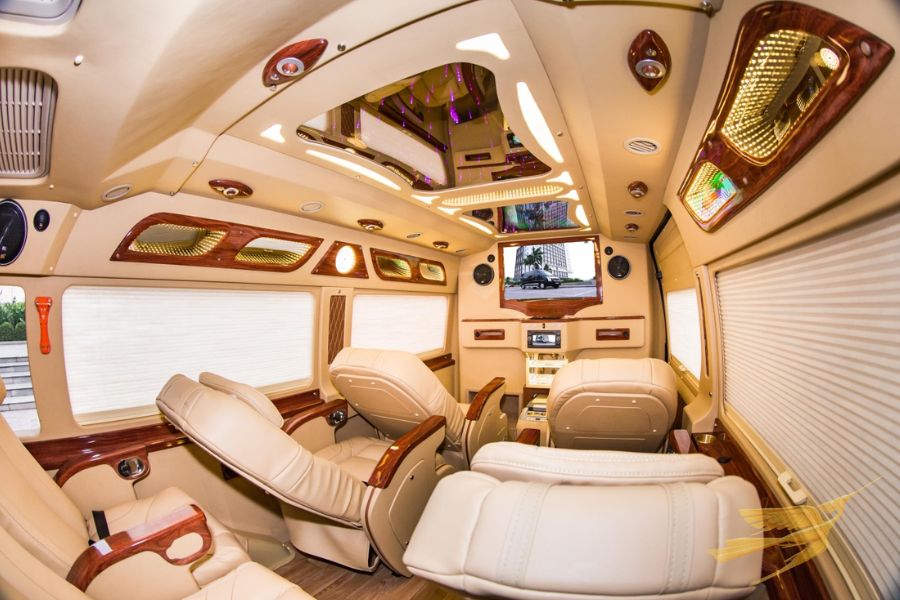
Limousine buses are suitable for travelers who want a good-quality experience and are willing to pay more. Comfortable seats, robust cars, adequate amenities (chargers, lights, A/Cs, complimentary water, television, etc.), and decent chauffeur service are the bonuses to this type of bus.
Recommended limousine bus suppliers: Sapa Explore, GreenLion Bus, King Express Bus, Daily Limousine, and Luxury Van Limousine.
Sapa Bus Station Timetable (2026 Update)
Sapa Bus Station serves popular routes between Sapa and northern/southern destinations. For example, you can find Sapa – Hanoi, Sapa – Thai Binh, Sapa – Ha Nam, Sapa – Quang Ninh (Halong), Sapa – Ho Chi Minh City, and Sapa – Binh Duong. Although the routes are not varied, tourists have many schedules and suppliers.
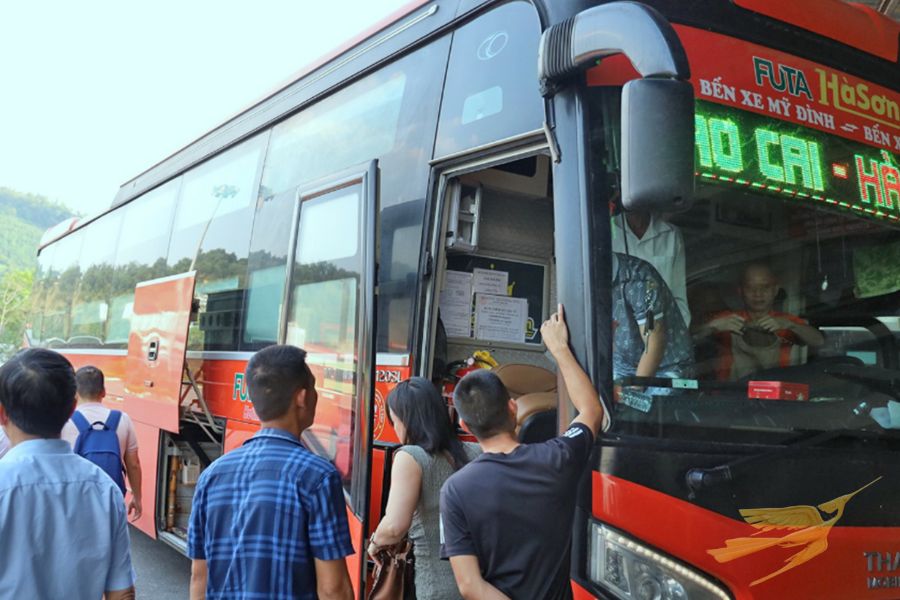
The daily Sapa bus station timetable will change. You can check them out at the station or on booking websites like Vexere. We would like to provide a Sapa bus schedule reference as follows:
| Route | Bus supplier | Time |
| Sapa – Hanoi | Ha Son Hai Van | 5–8 AM |
| Sao Viet | 10 AM – 01:10 PM | |
| Interbus Lines | 7:20–9:30 AM | |
| Shuttles Bus | 7–11:10 AM | |
| Hung Thanh | 2–5 PM | |
| Green Bus | 9 AM – 12 PM | |
| Pumkin Limousine | 8:10–11 AM | |
| Thien Viet | 9:10 AM – 1 PM | |
| Fansipan Express | 3–6 PM | |
| The Anh | 5–9 PM | |
| King Express | 7–10 PM | |
| Queen Cafe | 9 AM – 1 PM | |
| Sapa – Thai Binh | Hai Hoan | 5:50 PM – 1 AM |
| Tuan Tai | 9:50 AM – 3 PM | |
| Sapa – Ha Nam | Phuc An | 7 AM – 1 PM |
| Sapa – Quang Ninh (Halong) | Thien Ha – Phuc Xuyen | 5–10 PM |
| Sapa – Ho Chi Minh City (2 days) | Hien Phuong | 5 AM – 1 PM |
| Hoang Long | 9 AM – 4 PM | |
| Mai Linh | 10 AM – 5:30 PM | |
| Ngoc Le | 8 AM – 3:10 PM | |
| Sapa – Binh Duong (2 days) | Van Nam | 3–11 PM |
※ Bus schedules can be changed according to seasons, suppliers, and real situations. Please stay informed and double-check before going. ※
Sapa Bus Ticket Fares
Sapa bus ticket fees change according to the peak/low seasons, distances, and bus types. As price ranges are unstable, we can only provide predicted bus ticket costs. Please watch them below:
| Distance | Bus type | Price (per pax) |
| Sapa – Lao Cai | Public bus | 30,000–50,000 VND |
| Shuttle bus | 50,000–100,000 VND | |
| Limousine bus | 150,000–250,000 VND | |
| Sapa – Hanoi | Shuttle bus | 200,000–520,000 VND |
| Limousine bus | 300,000–420,000 VND | |
| Sapa – Halong | Shuttle bus | 500,000–700,000 VND |
| Sapa – Ho Chi Minh City | Shuttle bus | 1,500,000 VND |
※ Above are referential ticket prices. The exact prices will change depending on suppliers. ※
How To Buy Bus Tickets
How to buy Sapa bus tickets: Online platforms and in-person counters are all available.
- Ticket offices: Travelers can buy bus tickets directly from the Sapa Bus Station’s ticket counters. Or, if you catch a bus along the way, they will charge a bus fee before you get on the bus.
- Hotlines: Ticket booking hotlines can help you reserve a ticket. Bus station Sapa contact for tickets or related information: 02143887733 – 02143771727.
- Online platforms: Online tickets are supported for those who don’t want to line up or buy tickets on site. You should book an online ticket from reliable platforms, such as Vexere, Baolau, Klook, etc.
- Hotels/ travel agencies: Local travel agencies and hotels can help book bus tickets for tourists. If you don’t want to make a reservation on your own, it’s a good idea to have them help you out.
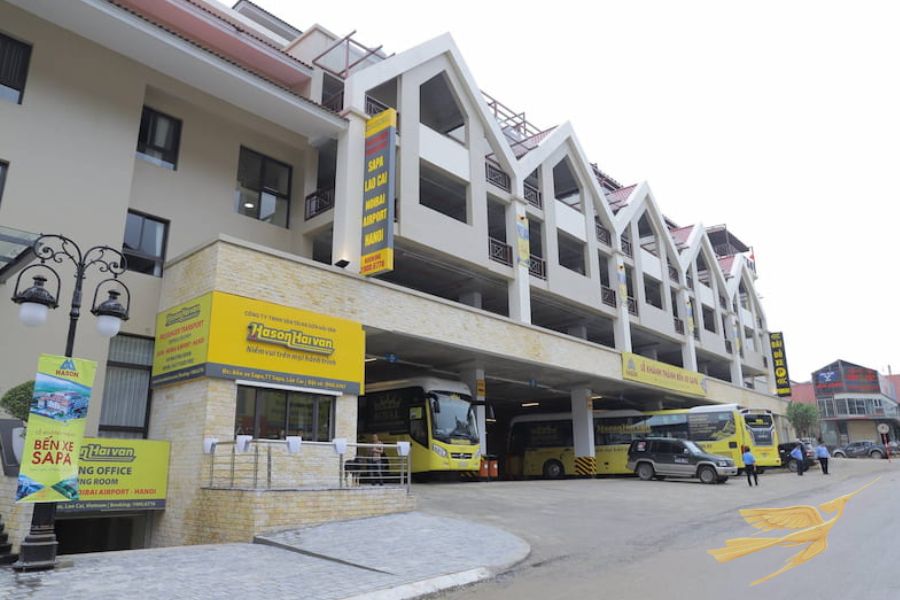
Tips for buying a bus ticket in Sapa:
- During the peak tourism time, you should reserve a seat at least 1–2 days in advance. It will help you choose preferred seats, convenient travel time, and good services.
- Check the timetables, itineraries, pickup & drop-off locations, and travel durations carefully before you decide to book.
- Watch out for cyber scammers when booking online tickets.
- It’s best to book bus tickets via official websites, travel platforms (e.g., Klook, Vexere, or Baolau), Zalo/WhatsApp hotlines, or physical offices.
- Clarify booking details before making payments and traveling.
- Bring cash if you buy a ticket directly at the Sapa Bus Station or bus stops.
Sapa Bus Station Facilities & Services
Sapa Bus Station was established and has been developed since 2012. Its whole structure is modern, versatile, and convenient, serving the interests of both bus suppliers and passengers. Thus, the Sapa Express Bus Station is always the main hub for public transportation in Sapa.
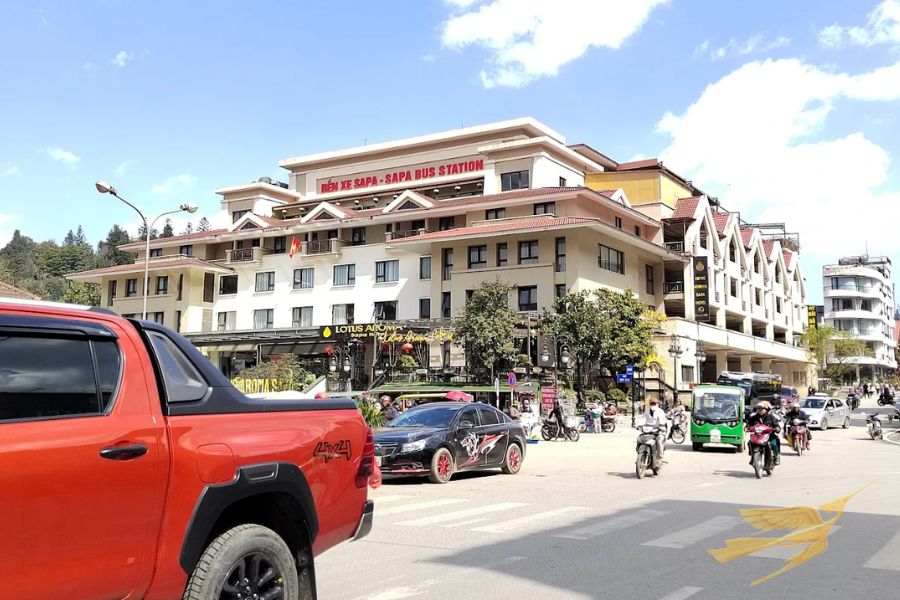
First, its favorable location and large scale are super convenient. Located on the main roads of N1, N2, and N4, this 4,012-square-meter station offers an easily accessible center for 300 buses. Therefore, it has become the first stop for many buses.
Furthermore, the bus station Sapa is equipped with advanced utilities to cater to all travel needs of customers. In particular, the station offers:
- Waiting areas and seating: Travelers can wait for their buses or ask for information at spacious, well-lit, clean, and cool waiting lounges.
- Restrooms: The station is provided with sufficient restrooms with good cleanliness.
- Food stalls, cafes, or convenience stores nearby: Located in a convenient spot, the bus station is close to various stores.
- Luggage storage and assistance services: Customers can find quick assistance for luggage or related problems (e.g., tickets, routes, timetables, etc.).
- Goods delivery services: You can also find goods delivery services at the bus station. It promises punctual and precise merchandise transportation.
What’s more, updated security camera systems are installed in the bus station in Sapa. It contributes greatly to the station’s management efficiency. Customers can be assured of better security and quicker solutions when bad situations happen.
Last but not least, Sapa Bus Station is open 24/7, every day. So, customers can start their trips and use the bus services around the clock. There are always on-duty staff to provide help with information, ticket purchases, arrivals, departures, and so on.
Sapa Buses Vs. Other Transportation Alternatives
Why should you travel by Sapa bus? – There are several reasons why buses are popular in Sapa, including:
- Affordable prices: Buses are the cheapest among other means of transportation. It’s suitable for various kinds of tourists, especially solo backpackers or small groups.
- Time convenience: Different types of buses run throughout the day. Thus, customers have more options.
- Ample safety: Bus drivers are experienced and knowledgeable about routes in Sapa. However, they may speed up sometimes, causing travel risks.
- Sightseeing chances: Bus windows are good for sightseeing. But you cannot stop on the way to admire the views or take a picture.
- Various suppliers: You have many bus suppliers of all types to choose from.
Besides buses, what means of transportation are available in Sapa? – If you don’t want to travel by bus, there are other options:
- Taxis/ride-hailing apps (e.g., Grab) are quick, private, and door-to-door. However, its costs are very high and unavailable for long distances like Sapa-Hanoi.
- Motorcycles are cheap but dangerous for those who don’t have enough experience, health, or a legal driving license.
- Private cars (with drivers) are flexible in pickups, drop-offs, and travel times. It also provides en-route stops and special extra services as you require. Its costs are high. Best for families, friend groups, and those with heavy luggage.
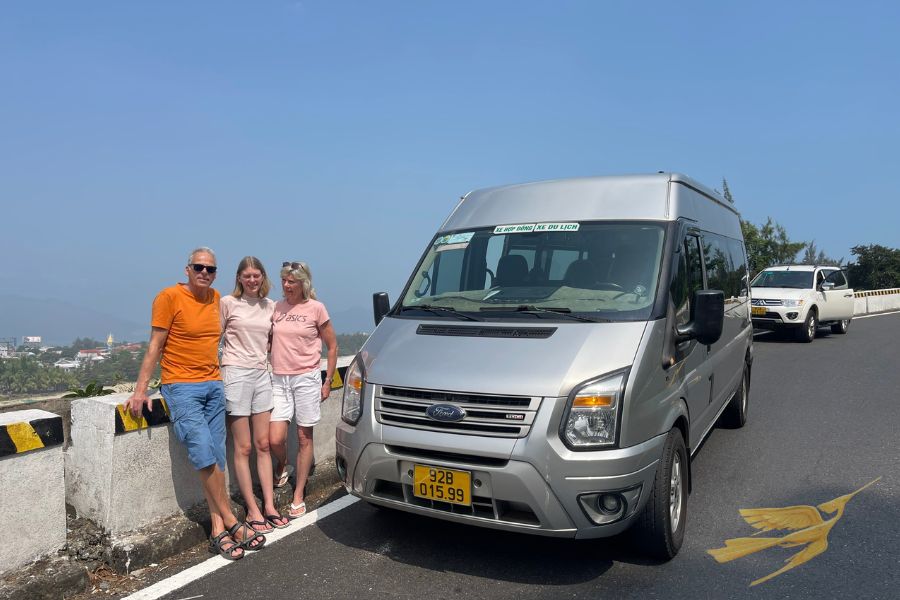
You might be interested in private car transport from Sapa, such as:
- Sapa To Hanoi Private Car – 149 USD/sedan
- Sapa To Hai Phong By Car – 167 USD/sedan
- Sapa To Cat Ba Island By Car – 200 USD/sedan
- Sapa To Halong Bay Luxury Car – 240 USD/sedan
- Sapa To Ninh Binh Luxury Car – 250 USD/car
Wise Tips For Travelers
- Terrain: Sapa and many destinations in northern Vietnam have winding roads and rocky passes, with two lanes. Although all roads are asphalt-paved and improved, there will be sharp turns and steep slopes.
- Weather: Rainy seasons in Sapa (June to August) will cause thick fog, creating limited sight and slippery roads. For safety reasons, bus drivers will run more slowly, affecting the travel time.
- Motion sickness: Those who have motion sickness should take their tablets at least 30 minutes before traveling. Your motion sickness will be more uncomfortable due to the unpleasant winding roads in Sapa.
- Early ticket booking: You should book tickets beforehand, especially during the peak times, including weekends, holidays, harvest times (September to October), and cloud-hunting times (winter). You can secure slots and select better seats by booking early.
- Trip confirmation: Don’t forget to confirm your trip’s departure time and pickup place 1 day or some hours before traveling.
- Early show: Coming to the pickup time 15–30 minutes early is highly recommended.
- Luggage management: Mark your luggage to avoid mistakes when retrieving your luggage after the trip. You should keep valuable belongings, such as money, phones, and personal documents, by your side. Double-check your belongings before leaving the bus.
- Stay well-ordered: Please keep the bus peaceful by avoiding littering, causing trouble, or making loud noises.
- Stay alert to strange buses: Stick to your pre-booked buses. Do not follow strange bus touters. You may have to deal with scams, overcharges, or bad-quality buses.
- Learn about your drop-off: You should look up taxis or Grab services at your drop-off place in advance. This helps you be more proactive at the new place.
Conclusion
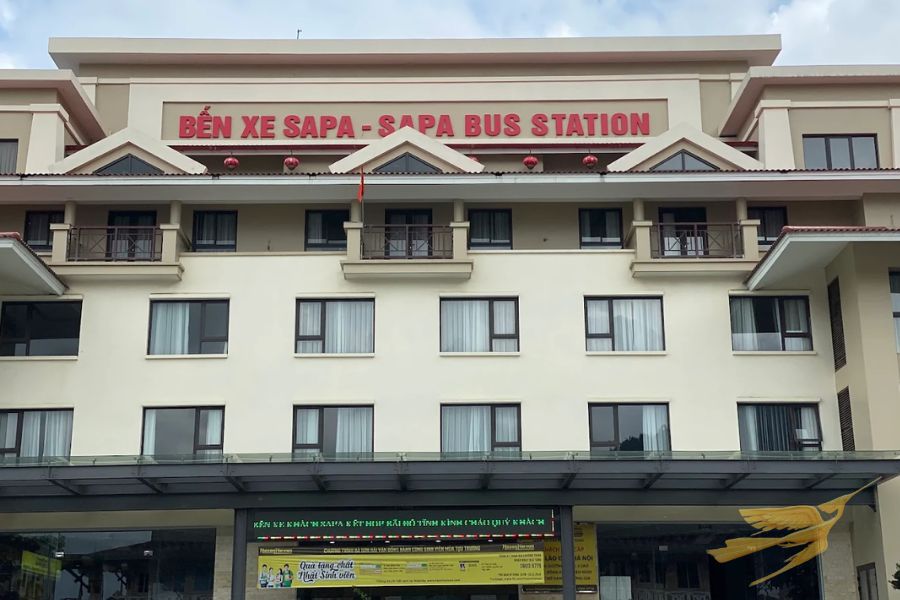
In conclusion, Sapa Bus Station is a key hub for travelers to explore the beautiful town of Sapa and its stunning surroundings. With various bus options available, including public buses, sleeper buses, and limousine buses, there is something for every budget and preference.
The station’s central location makes it easy to access and connect with popular tourist spots and local accommodations. Whether you are a backpacker on a budget or a family seeking comfort, Sapa Bus Station caters to all.
Be sure to check the latest timetables and ticket prices to plan your journey smoothly. Our travel blog about the bus station in Sapa hopes that we have provided useful information for your upcoming bus trip. Sapa Private Car wishes you a wonderful journey. Thanks for reading.