
Travel Guide
How Many Days in Sapa? 2, 3, or 4 Days for the Perfect Trip

Aug
Quick Answer
How many days in Sapa are enough? For most first-time visitors, the ideal duration in Sapa is 3 days and 2 nights. This sweet spot gives you two full, uninterrupted days in the Hoang Lien Son range. It’s enough time to trek deep into the valley, explore indigenous hill-tribe culture, experience Fansipan Peak, and take in the atmosphere of Sapa town without feeling like you are racing against the clock.
However, the right length of stay depends heavily on your priorities, travel pace, and transit schedules:
- Choose 2 Days (1 Night): Best for travelers with a tight Vietnam itinerary who want a quick taste of Sapa’s iconic landscapes.
- Choose 3 Days (2 Nights): The benchmark choice for a balanced mix of village trekking, cultural experiences, and mountain viewpoints.
- Choose 4 Days (3 Nights) or More: Essential for serious hikers, photography enthusiasts waiting for clear weather windows, and slow travelers aiming for remote multi-day homestays.
Sapa Duration Breakdown
| Trip Duration | Usable Sightseeing Time | Best For | Realistic Highlights Covered |
| 2 Days / 1 Night | ~1.5 Days | Short visits & tight schedules | Sapa town, Cat Cat or Ham Rong, 1 short valley trek |
| 3 Days / 2 Nights | ~2.5 Days | First-timers, families & couples | Muong Hoa Valley trek (Lao Chai/Ta Van), Fansipan Cable Car, town highlights |
| 4 Days / 3 Nights | ~3.5 Days | Photographers & casual hikers | Deep valley trekking (Ta Phin/Giang Ta Chai), O Quy Ho Pass, Fansipan, relaxed pace |
| 5+ Days | 4+ Full Days | Trekkers & slow travelers | Multi-day off-grid trekking, village homestays, remote ethnic markets (e.g., Bac Ha) |
Is 2 Days Enough for Sapa?
Yes, 2 days in Sapa can work, but only if you plan around transit realities.
A common pitfall is assuming a 2-day, 1-night itinerary equals 48 full hours of exploration. The road journey via the Noi Bai–Lao Cai Expressway (CT05) takes 5.5 to 6 hours each way by limousine bus or sleeper cabin. Taking an overnight train lands you in Lao Cai railway station at 5:30 AM, followed by a 45-to-60-minute mountain road transfer up to Sapa.
As a result, a Sapa 2 days 1 night itinerary yields roughly 28 to 30 usable daytime hours in the destination.
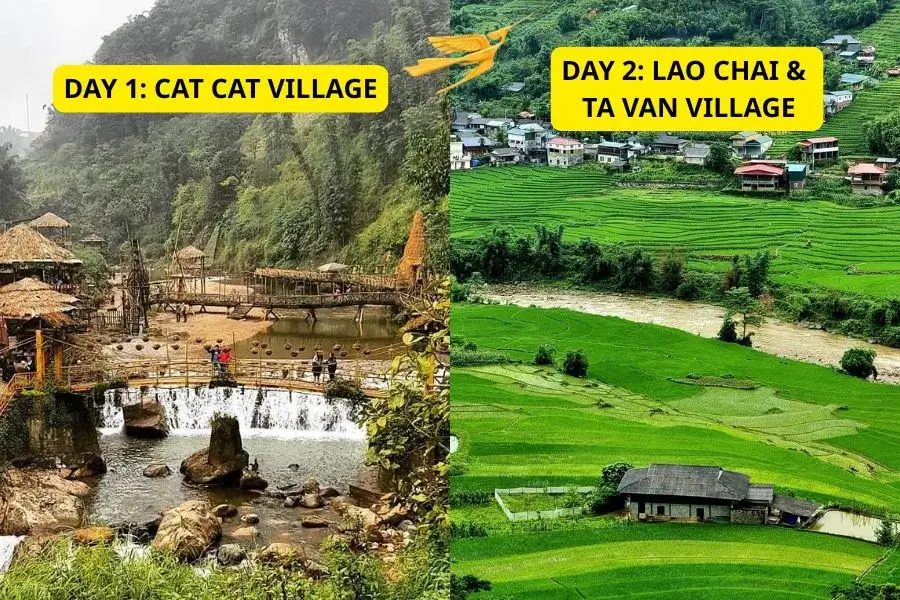
Day 1: Morning transit from Hanoi (dep. 06:30) ➔ Arrive Sapa ~12:30 ➔ Check-in ➔ Afternoon walk to Cat Cat Village or Ham Rong Mountain ➔ Evening around Sapa Stone Church & night market.
Day 2: Morning trek through Y Linh Ho to Lao Chai Hmong village ➔ Lunch in Ta Van Village ➔ Afternoon limousine transfer back to Hanoi (dep. 15:30).
So, are 2 days enough for Sapa? It works as a preview, but if long-distance trekking or summiting Fansipan is your primary goal, 2 days will feel rushed.
3 Days in Sapa: The Best Choice for Most Travelers
Selecting 3 days in Sapa provides the ideal balance between travel time, outdoor activities, and cultural immersion. You get time to step off the paved road and into the terraced valleys without stressing over rigid schedules.
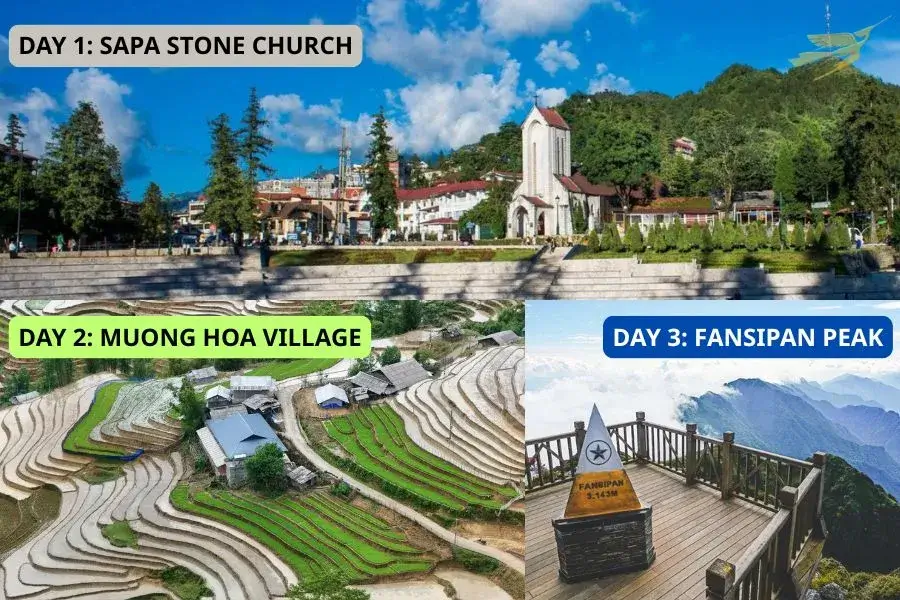
Day 1: Hanoi to Sapa & Cultural Orientation
- Travel: Board a morning VIP sleeper cabin or private transfer from Hanoi.
- Afternoon: Arrive around midday. Check into your hotel or valley lodge. Walk around Sapa town center, visit the Sapa Stone Church, and enjoy high-altitude local Arabica coffee overlooking the mist.
- Evening: Try a local Black Hmong or Red Dao hotpot (such as sturgeon or salmon hotpot) in town.
Day 2: Deep Trekking in Muong Hoa Valley
- Morning to Afternoon: Embark on a guided 12–15 km trek through Muong Hoa Valley. Hike past the rice terraces of Y Linh Ho, Lao Chai (Black Hmong community), and Ta Van (Giay community).
- Cultural Experience: Enjoy a home-cooked lunch at a family-run establishment along the riverbank.
- Evening: Return to town or stay overnight at an authentic village homestay to experience a traditional herbal bath prepared by the Red Dao.
Day 3: Fansipan Peak & Departure
- Morning: Take the Sun World Cable Car up Fansipan Mountain (3,143 m). Ride the Muong Hoa Funicular from town, soar above the clouds, and ascend the final steps to the “Roof of Indochina.”
- Afternoon: Head back to town for a late lunch, retrieve your luggage, and board your afternoon return bus or private transfer back to Hanoi.
4 Days in Sapa: When Is It Worth Staying Longer?
Staying 4 days in Sapa transforms your visit from a standard sightseeing trip into an immersive mountain escape.
An extra day provides a critical buffer against unpredictable high-altitude weather. Sapa is famous for quick-shifting weather. Thick mountain fog can blanket the valley in minutes or completely obscure the view from Fansipan Peak. A 4-day window gives you room to pivot your plans when weather conditions change.
⭐ How to Spend Your Extra 4th Day:
- Alternative Valley Trekking: Explore less commercialized trails around Ta Phin Village (home to the Red Dao community) or Sau Chua, one of the highest and most pristine villages in the region.
- O Quy Ho Pass & Waterfalls: Hire a driver or motor scooter to cross O Quy Ho Pass, one of Northern Vietnam’s four great mountain passes. Then stop by Silver Waterfall (Thac Bac) and Love Waterfall (Thac Tinh Yeu).
- Golden Hour Photography: Spend an afternoon catching the sunset over the pass or photographing the light hitting the rice terraces in Se Seng Valley.

Matching Stay Length to Your Travel Style
Depending on your travel style, requirements for pacing, trail difficulty, and seasonal logistics can shift considerably.
How Many Days in Sapa for Trekking?
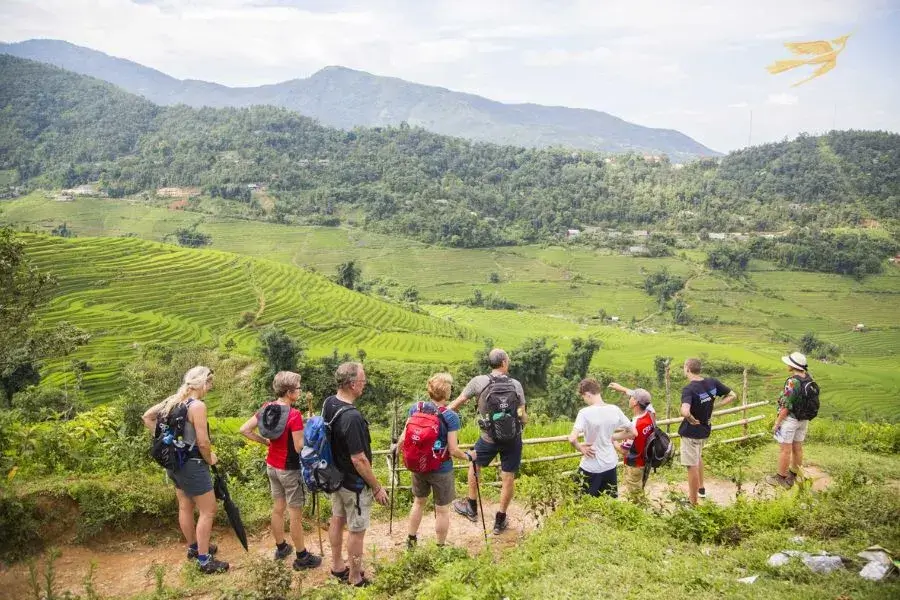
- Casual Hikers (1-Day Trek): 2 to 3 days is sufficient. You can complete a half-day or full-day walk through Lao Chai and Ta Van, then spend the rest of your time enjoying town comforts and viewpoints.
- Serious Trekkers (Multi-Day Off-Grid): Plan for 4 to 5 days. Multi-day treks crossing into Hoang Lien National Park, ascending Fansipan on foot via the Tram Ton trail (1–2 days of rigorous hiking), or traversing remote ridges require dedicated days away from Sapa town.
How Many Days for Fansipan Mountain?
You do not need a separate multi-day stay just for Fansipan. The Sun World Cable Car system reaches the peak area in roughly 15 to 20 minutes from the base station.
However, because morning cloud cover can block visibility at 3,143 meters, having a 3-day itinerary gives you two morning options to choose the clearest weather window for your ascent.
Pro-Tip for Fansipan: Book the Muong Hoa Funicular from the Sun Plaza station in town directly to the Cable Car station. Once at the upper station, if you wish to bypass the steep 600-stone-step summit climb, take the secondary Peak Funicular directly to the summit monument.

Travel Duration by Traveler Type
Matching your stay duration to your personal travel style ensures you balance sightseeing with adequate rest. The breakdown below details the optimal timeframe and primary focus for every type of traveler visiting Sapa:
| Traveler Type | Recommended Stay | Primary Strategic Focus |
| First-Time Visitors | 3 Days / 2 Nights | Best overall balance of valley trekking, town culture, and Fansipan Peak. |
| Couples & Honeymooners | 3 to 4 Days | Mixes luxury valley eco-resorts with relaxed light trekking and fine local dining. |
| Families with Kids | 3 to 4 Days | Allows a comfortable walking pace, cable car activities, and extra weather flexibility. |
| Photographers | 3 to 4 Days | Built-in buffer days for high-altitude mist clearing, golden hour photography, and ridge light. |
| Slow Travelers | 5+ Days | Ideal for deep homestay immersion, multi-day village routes, and weekly ethnic markets (e.g., Bac Ha). |
How Time to Visit Sapa Impacts Your Itinerary
The visual landscape of Sapa changes dramatically throughout the year. Choosing when to visit Sapa affects how many days you need to build in for weather adjustments.
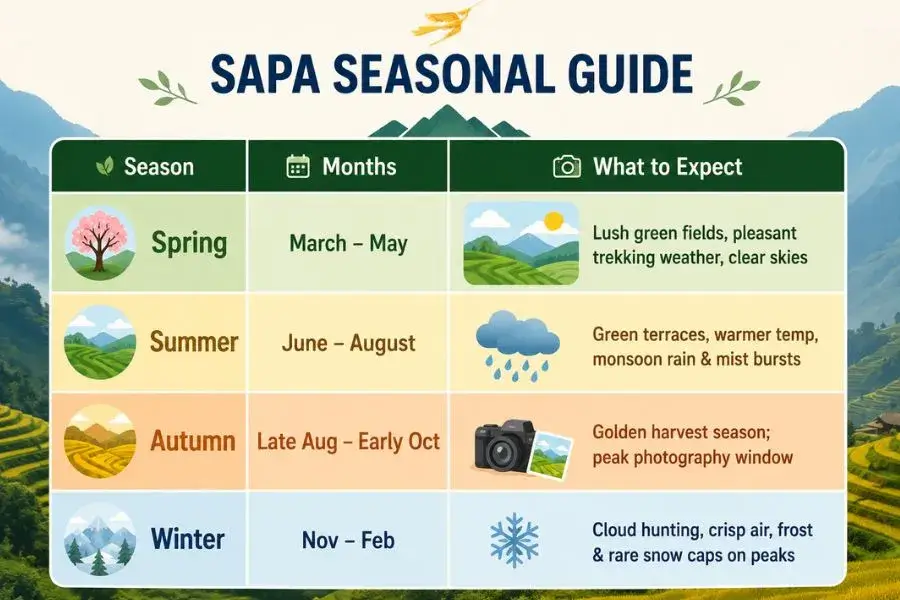
- The Golden Rice Harvest (Late August to Early October): This is peak season. Sapa rice terraces turn brilliant yellow before farmers harvest the crops. Book accommodations and transfers at least 3 to 4 weeks in advance.
- The Water-Pouring Season (April to May): Farmers fill the terraced fields with water prior to planting, turning the mountain slopes into vast, reflective mirrors. Excellent conditions for trekking with mild temperatures.
- The Winter Mist & Cloud Sea (December to February): Expect cold temperatures (dropping near 0°C at night). While views can be limited by fog, this is the prime season for “cloud hunting” above the inversion layer at Fansipan or O Quy Ho Pass.
Integrating Sapa into a Northern Vietnam Itinerary
When mapping out a broader trip across Northern Vietnam, Sapa pairs well with Hanoi, Ninh Binh, and Ha Long Bay.
Suggested 7-Day Northern Vietnam Route:
Hanoi (1.5 Days) ➔ Sapa (3 Days / 2 Nights) ➔ Ninh Binh (1.5 Days) ➔ Ha Long Bay Cruise (2 Days / 1 Night)
How Travel Time from Hanoi Affects Your Plan:
Sapa is located approximately 315 km northwest of Hanoi. Choosing the right transport mode from Hanoi to Sapa dictates how much usable time you have on Day 1 and Day 3:
- Sleeper Cabin Bus / VIP Limousine: 5.5 to 6 hours direct via the expressway. Departing Hanoi at 06:30 AM puts you in Sapa in time for a late lunch.
- Private Transfers: For maximum comfort on road transfers, opting for a private car transfer offers flexible departure times and door-to-door drop-offs directly at your hotel.
- Overnight Train (Hanoi to Lao Cai): Departs Hanoi around 21:30 and arrives in Lao Cai Train Station at ~05:30 AM. You must take an additional 45-minute minibus or taxi up the mountain pass to Sapa town. This option saves on daytime travel hours and a night’s hotel cost.
If you want to get from Sapa to anywhere in northern Vietnam, check out our Sapa car rental or Sapa luxury car transfers, such as:
- Sapa To Hanoi Limousine – $180 per limousine
- Sapa To Ninh Binh Luxury Car – $250 per limousine
- Private Car from Sapa to Halong Bay – from $193 per car
Practical Essentials & Common First-Timer Pitfalls
To make the most of your time in Sapa, avoid these common planning mistakes:
- Overpacking Your Arrival Day: Trekking 15 km immediately after a 6-hour morning road trip or an overnight train ride is a quick recipe for exhaustion. Keep Day 1 light with town exploration and low-impact sightseeing.
- Ignoring Microclimates: Sapa town can be clear while the valley below is completely shrouded in fog, or vice versa. Check live weather feeds or ask local guides before paying for high-elevation cable car tickets.
- Underestimating Trail Conditions: Mountain paths are steep and can get very slippery after rain. Pack proper hiking shoes with solid tread; casual sneakers often lack adequate grip on wet clay soil.
- Sticking Only to Commercialized Spots: Visiting Cat Cat Village gives a convenient overview, but it can feel quite commercialized. Walk deeper into Y Linh Ho, Ta Van, or Ta Phin for a more authentic cultural experience.
Before heading out, review our practical guide on what to wear in Sapa to ensure you pack appropriate layers for rapidly changing mountain conditions. Moreover, browse our recommendations on where to stay in Sapa to pick the best base between town convenience and valley views.
FAQs
How many days do you need in Sapa if you don’t trek?
If you prefer not to trek, 2 days and 1 night is sufficient. You can ride the funicular and cable car up Fansipan Peak, drive to O Quy Ho Pass for sunset views, explore Sapa town, and take a short walk around Cat Cat Village without undertaking long hikes.
Can you do a day trip to Sapa from Hanoi?
Technically yes, but it is not recommended. With 11 to 12 hours of round-trip driving, a day trip leaves you with only 3 to 4 rushed hours in Sapa. It is far better to spend that day in Ninh Binh or Ba Vi instead if you cannot stay overnight.
Is it better to stay in Sapa Town or Muong Hoa Valley?
Stay in Sapa Town if you want easy access to restaurants, cafes, ATMs, transport hubs, and the Fansipan Cable Car terminal. Stay in Muong Hoa Valley (Lao Chai / Ta Van) if you prefer quiet views, waking up surrounded by rice terraces, and an authentic village homestay experience.
What is the best way to handle luggage during a multi-day trek?
Most hotels and homestays in Sapa town offer free, secure luggage storage. You can leave your large suitcases at your town base and pack a light daypack with essentials for 1 or 2 nights down in the valley villages.
Final Thoughts
Deciding how many days to spend in Sapa comes down to how deeply you want to experience the landscape:
- 3 Days and 2 Nights remains the gold standard for most travelers. It offers enough time to trek the valleys, summit Fansipan, and immerse yourself in local culture without feeling rushed.
- Stretch to 4 Days if you value slow travel, photography, or extended trekking.
- Keep it to 2 Days only if your timeline in Vietnam leaves no alternative.
No matter how long you stay, Sapa’s combination of mist-shrouded peaks, rich ethnic culture, and dramatic terraced valleys makes it one of the most memorable destinations in Southeast Asia.
Thanks for reading our Sapa Private Car team’s blog on How many days in Sapa. Prepare your layers, double-check the weather windows, and enjoy your adventure into the mountains of Northern Vietnam!